Aqarrati
A rental-management platform for Moroccan landlords: legally compliant contracts in minutes instead of hours, plus payment tracking and tenant communication in one place.
- Industry
- Real estate
- Platform
- Web (responsive PWA)
- Role
- Product owner & full-stack developer
Business context
Around 95% of Morocco's rental properties are managed by hand. Landlords and small agencies lose 40+ hours a month to drafting contracts, chasing rent, and fielding tenant messages across WhatsApp threads — and a single contract can cost 500–1,500 MAD in lawyer fees while still risking non-compliance with Dahir 1.80.315. Aqarrati was built to replace that manual process with a localized SaaS platform, so landlords can manage a portfolio professionally without handing 10% of rent to a management company.
My responsibility
I own this product end to end — defining the requirements, designing the architecture, and building both the NestJS API and the Next.js web application, along with the Docker-based deployment setup and CI pipeline.
Solution
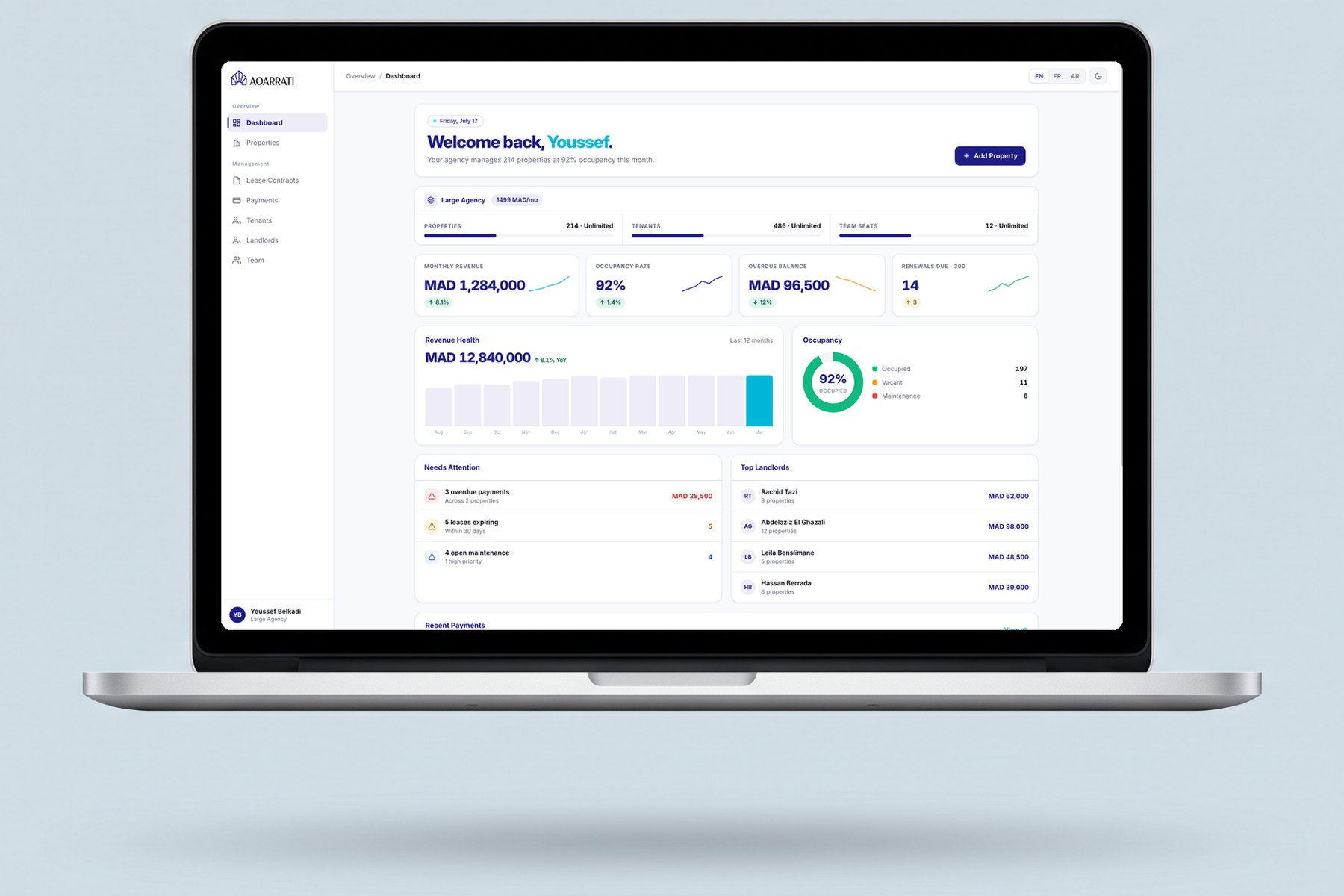
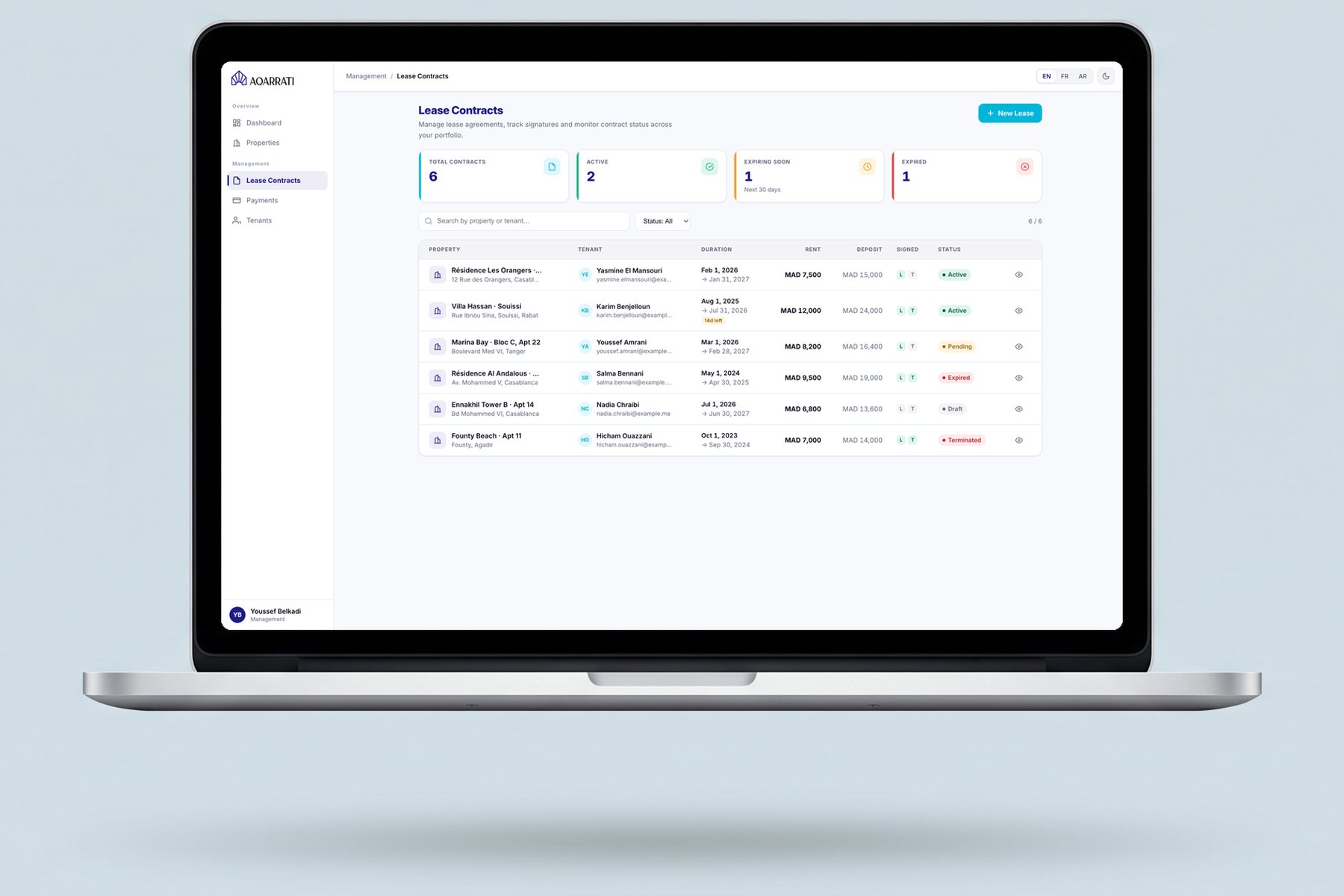
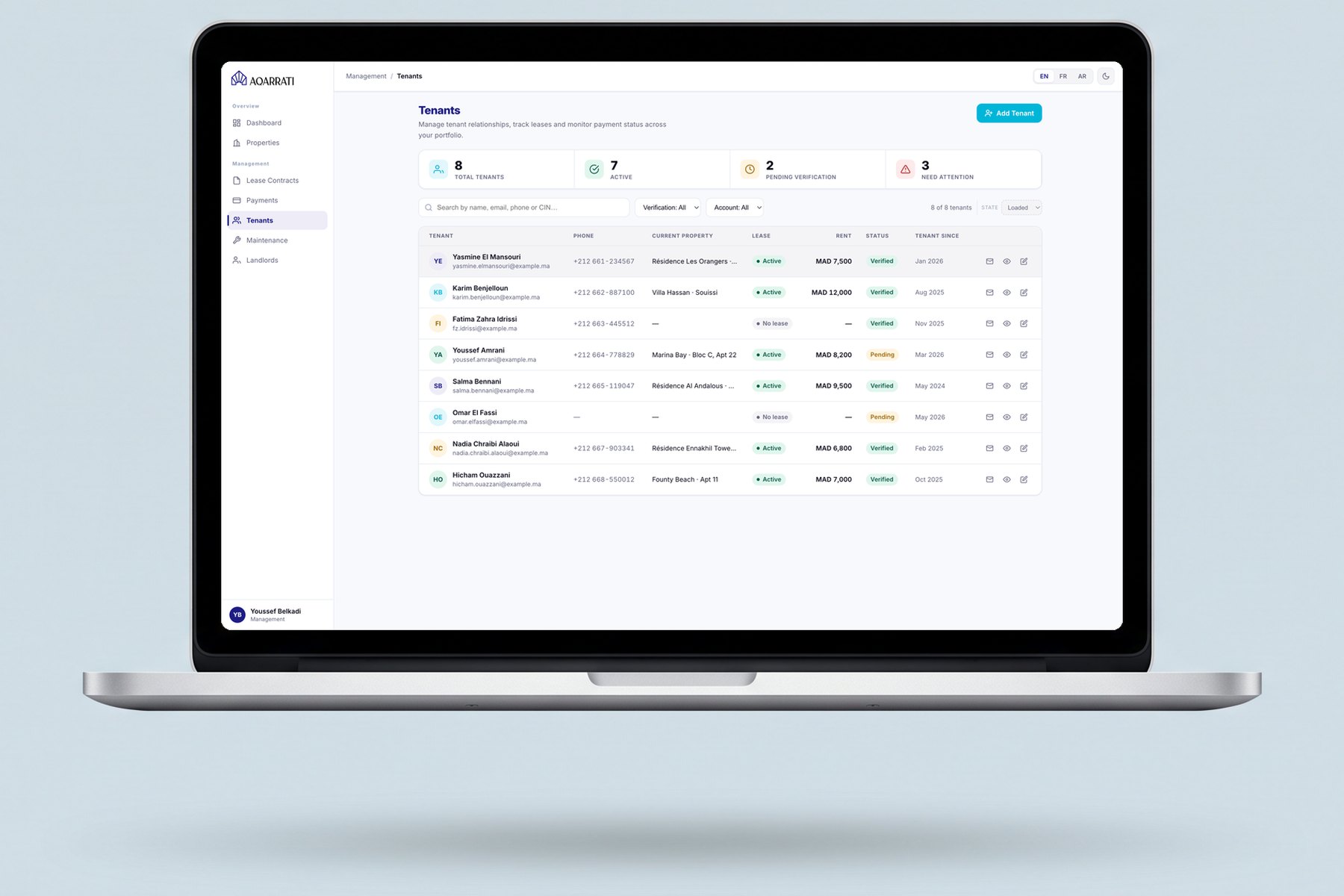
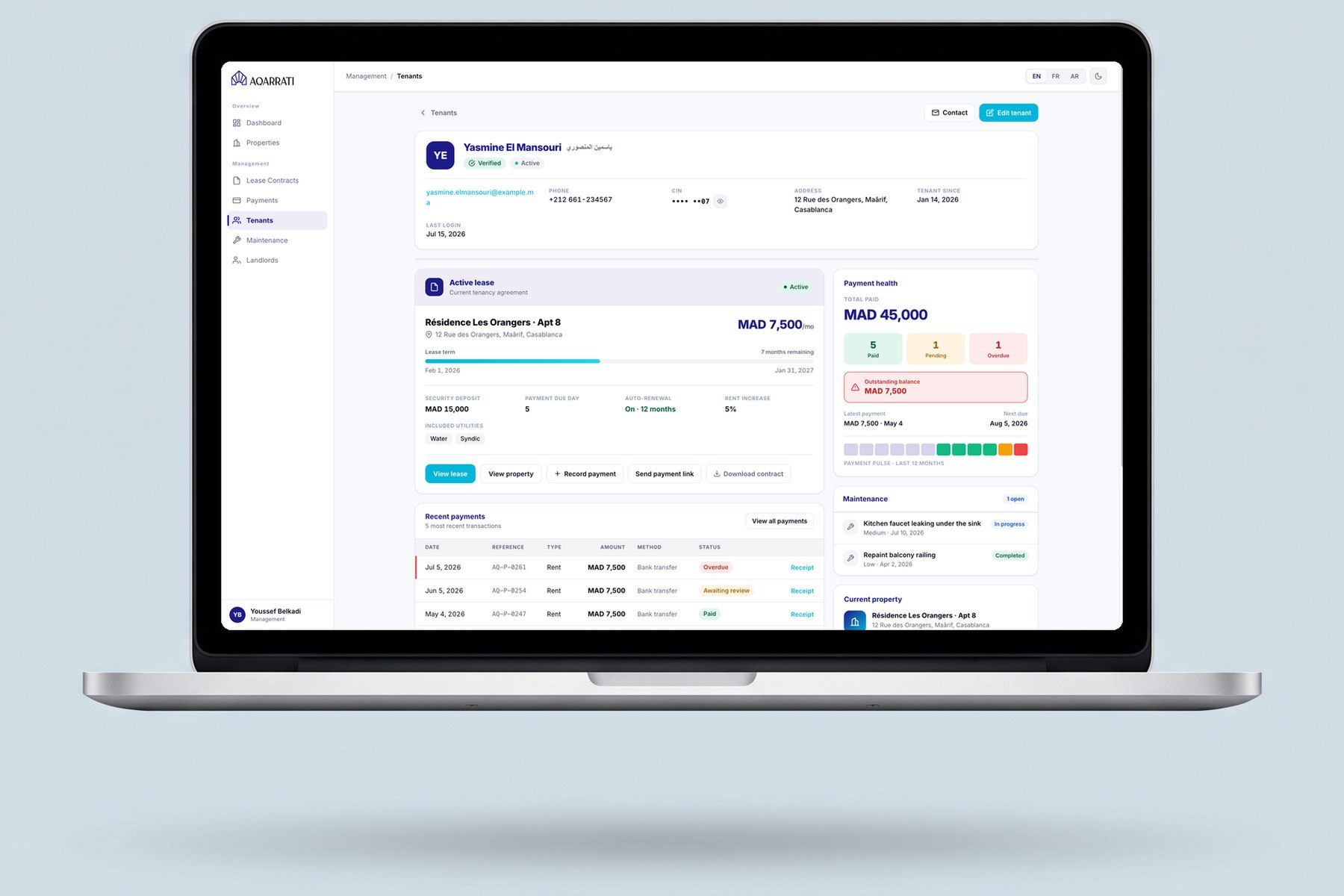
The platform generates legally compliant rental contracts in French, Arabic, and English from structured tenant and property data, then tracks the money and the conversation around them: a portfolio dashboard with rent collected and outstanding balances, manual payment reconciliation with automated reminders and PDF receipts, a centralized tenant communication hub, and a basic maintenance-request flow. It is built as a multi-tenant SaaS with role-based access, background jobs for reminders and document generation, and real-time updates over WebSockets.
Results
Pre-launch. The platform build is complete and contract templates are going through legal certification ahead of a beta in Tangier. Adoption and retention figures will be published here once there is real usage to report.
Technology
A TypeScript monorepo sharing types, Zod schemas, and UI components between the API and the web app. MongoDB suits the variable shape of property and contract records; Redis backs both caching and the Bull queues that drive reminders and PDF generation.